Role of Summaries in Webinars: Maximize Learning Efficiency


Over half of American professionals say they struggle to keep up with dense, hour-long webinars. Staying informed is crucial, but sifting through endless recordings wastes valuable time. Webinar summaries break down complex sessions into focused insights, giving readers a fast track to the most important ideas. Whether you are a student, team leader, or executive, discovering how these tools improve learning and decision-making will help you make the most of every digital presentation.
Table of Contents
- Defining Webinar Summaries And Core Purpose
- Popular Summary Types And Formats Explained
- How Webinar Summaries Enhance Learning Retention
- Use Cases For Students, Professionals, And Teams
- Challenges, Limitations, And Common Pitfalls
Key Takeaways
| Point | Details |
|---|---|
| Webinar Summaries Increase Efficiency | They condense lengthy presentations into actionable insights, saving time for decision-makers. |
| Diverse Formats Enhance Reach | Various summary types, like executive summaries and infographics, cater to different audiences and purposes. |
| Improve Learning Retention | AI-generated summaries help digest complex information, making it easier for learners to retain key concepts. |
| Challenges in Content Accuracy | Automated summaries may struggle with nuance and context, necessitating careful human oversight for effectiveness. |
Defining Webinar Summaries and Core Purpose
Webinar summaries are strategic distillations of comprehensive online presentations that transform lengthy digital events into precise, actionable insights. These condensed documents capture the essential knowledge, key discussion points, and critical takeaways from professional training sessions, academic lectures, and industry conferences. By extracting the most valuable information, webinar summaries provide decision-makers with rapid comprehension without requiring them to invest hours watching the entire original recording.
The core purpose of a webinar summary extends far beyond simple note-taking. These documents serve multiple strategic functions in knowledge management and professional development. Engagement metrics play a crucial role in understanding their effectiveness, with comprehensive summaries tracking critical indicators like audience participation, technical performance, and content resonance. Event summaries help marketers analyze audience interactions through metrics such as attendance rates, poll responses, and participant questions, transforming raw webinar data into actionable intelligence.
Effective webinar summaries typically include several key components that maximize their utility:
- Concise overview of the primary topic and presenter
- Key discussion points and main arguments
- Critical insights and takeaways
- Quantitative data or research referenced
- Potential action items or recommended next steps
Professionals across industries recognize these summaries as powerful tools for knowledge preservation, continuous learning, and strategic communication. Whether used for personal skill development, team training, or organizational knowledge sharing, webinar summaries bridge the gap between information overload and targeted, efficient learning.
Popular Summary Types and Formats Explained
Webinar summaries have evolved into diverse formats tailored to different professional needs and communication strategies. AI-generated video summaries transform complex event content into instantly consumable insights, enabling organizations to maximize the reach and impact of their digital presentations. These summaries range from concise executive briefings to comprehensive multimedia representations that capture the essence of the original webinar.
The most common summary types include executive summaries, technical briefs, highlight reels, and multi-channel content adaptations. Repurposing webinar content allows organizations to extend their knowledge sharing beyond the original event. Transforming webinar material into blog posts, white papers, and eBooks increases lead generation and prospect engagement, creating multiple touchpoints for audience interaction.
Popular summary formats can be categorized by their specific objectives and target audiences:
- Executive Summaries: Concise, high-level overviews for senior leadership
- Technical Briefs: Detailed analysis targeting specialized professionals
- Highlight Reels: Short video clips capturing key moments
- Infographic Summaries: Visual representations of complex information
- Slide Decks: Condensed presentation slides with core insights
By strategically selecting and designing summary formats, organizations can amplify their webinar content’s impact, reach wider audiences, and create lasting value from a single digital event. The goal is not just to record information, but to transform it into a flexible, shareable knowledge asset that continues to educate and inspire long after the original presentation.
How Webinar Summaries Enhance Learning Retention
AI-generated summaries dramatically improve learning retention by transforming complex information into digestible, targeted knowledge packages. These summaries leverage cognitive science principles, breaking down lengthy presentations into structured, memorable segments that align with how the human brain processes and stores information. By distilling extensive content into clear, concise insights, learners can more effectively absorb, comprehend, and recall critical information.

The cognitive benefits of webinar summaries stem from several key psychological mechanisms. Cognitive load reduction plays a crucial role in enhancing learning efficiency. When information is presented in a condensed, well-organized format, learners experience less mental strain, allowing them to focus on understanding core concepts rather than struggling with information overload. This targeted approach helps individuals create stronger mental connections and more robust memory pathways.
Key strategies that webinar summaries employ to enhance learning retention include:
- Highlighting key takeaways and primary arguments
- Presenting information in a hierarchical, structured format
- Providing visual and textual cues that aid memory formation
- Reducing cognitive load through strategic information compression
- Creating multiple entry points for understanding complex topics
Ultimately, webinar summaries serve as powerful cognitive tools that transform passive listening into active learning. By presenting information in a concentrated, accessible manner, these summaries empower learners to engage more deeply with content, retain information more effectively, and apply knowledge more confidently across various professional and academic contexts.
Use Cases for Students, Professionals, and Teams
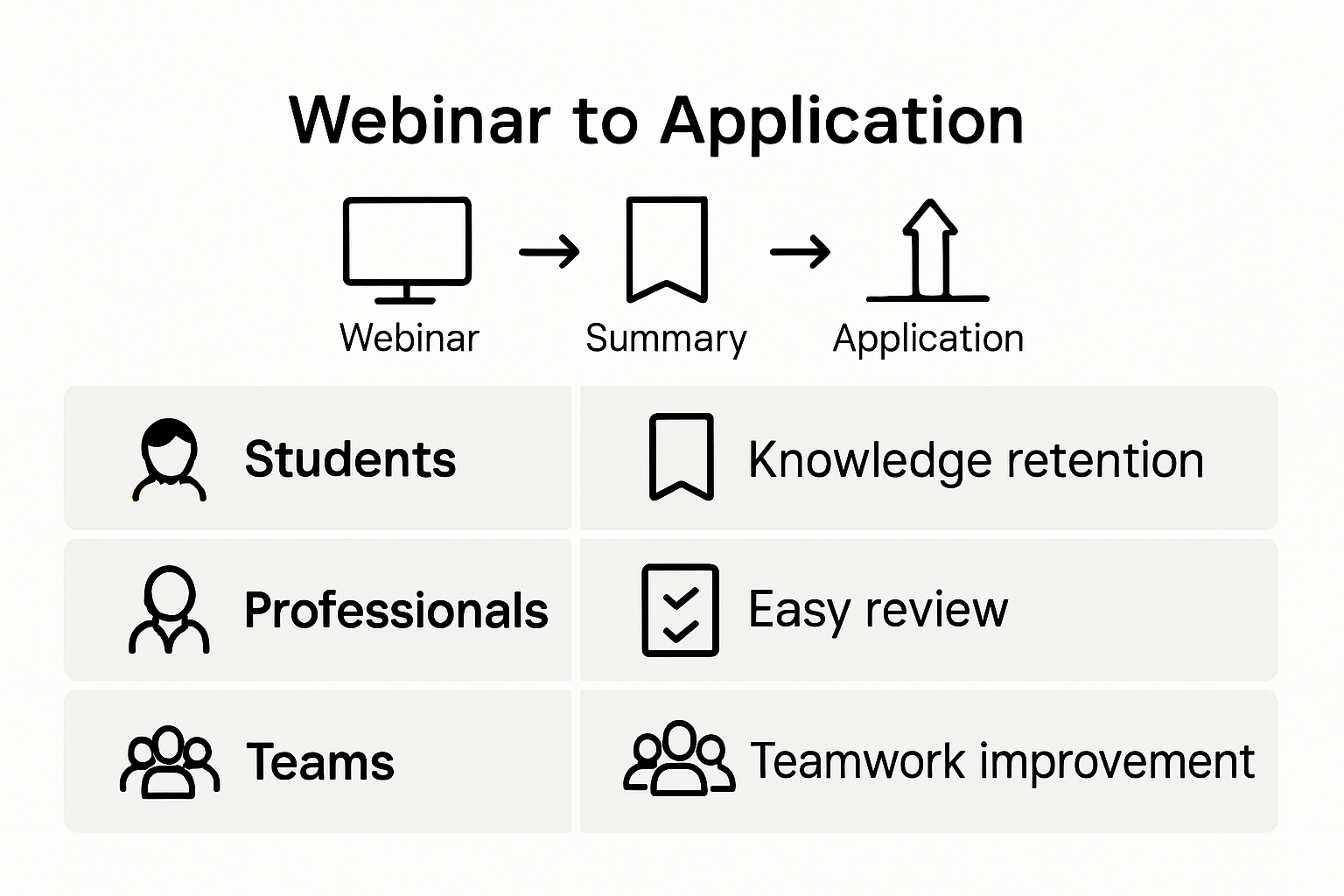
Webinar summaries serve diverse audiences by transforming complex information into targeted, actionable knowledge. Repurposing webinar content across multiple formats extends its reach and generates significant value for students, professionals, and teams seeking efficient learning strategies. Each audience segment leverages these summaries uniquely, adapting the condensed information to their specific educational and professional requirements.
For students, academic summaries become critical research tools that accelerate comprehension and study efficiency. Graduate researchers, undergraduates, and doctoral candidates can quickly extract key theoretical frameworks, methodological insights, and critical arguments from extensive lectures and conference presentations. Professional learners, including mid-career managers and industry specialists, utilize webinar summaries to stay current with emerging trends, technological advancements, and strategic insights without investing hours in full-length recordings.
Specific use cases for different audience segments include:
- Students: - Rapid research compilation
- Exam preparation
- Literature review acceleration
- Professionals:
- Continuous skill development
- Industry trend monitoring
- Quick knowledge acquisition
- Teams:
- Collaborative learning
- Knowledge sharing
- Strategic alignment and training
Teams and organizational units benefit particularly from webinar summaries by creating standardized knowledge repositories that facilitate collective learning and professional development. By transforming individual learning experiences into shareable, digestible content, these summaries bridge knowledge gaps, promote continuous learning, and support more dynamic, adaptive workforce training strategies.
Challenges, Limitations, and Common Pitfalls
AI-generated webinar summaries face significant challenges in maintaining content accuracy and nuanced understanding. The primary limitation lies in the complex process of extracting contextual insights without losing the original presentation’s depth and subtle meaning. Automated systems struggle to capture the intricate layers of human communication, including tone, implied meanings, and complex argumentative structures that require sophisticated contextual comprehension.
The technical constraints of summary generation create multiple potential pitfalls for users and content creators. Ineffective content repurposing can result in summaries that lack clarity, engagement, and targeted relevance, diminishing the original material’s impact. Key challenges include contextual misinterpretation, loss of critical nuances, and the risk of oversimplifying complex intellectual discussions into bland, generic representations that fail to capture the original presentation’s essence.
Common limitations in webinar summary creation include:
- Potential loss of contextual depth
- Algorithmic misinterpretation of complex arguments
- Reduced emotional and rhetorical subtleties
- Difficulty capturing speaker-specific communication styles
- Risk of oversimplification
- Potential bias in automated extraction processes
Navigating these challenges requires a balanced approach that combines technological efficiency with human oversight. Successful summary creation demands sophisticated algorithms capable of understanding context, maintaining intellectual integrity, and preserving the original content’s core message. Organizations and content creators must develop robust review processes that validate and enhance automated summaries, ensuring that the distilled knowledge remains accurate, engaging, and true to the original presentation’s intent.
Unlock the Full Potential of Webinar Learning with SummYT
The article highlights how webinar summaries reduce cognitive load and enhance learning retention by transforming lengthy, complex presentations into concise, actionable insights. Many professionals, students, and teams face the constant challenge of information overload and difficulty capturing key takeaways without investing hours in full-length videos. This is where SummYT steps in as an essential tool to bridge that gap. Our AI-powered YouTube summarizer automatically creates clear and focused summaries from any webinar or educational video, empowering you to absorb critical knowledge faster and remember it longer.
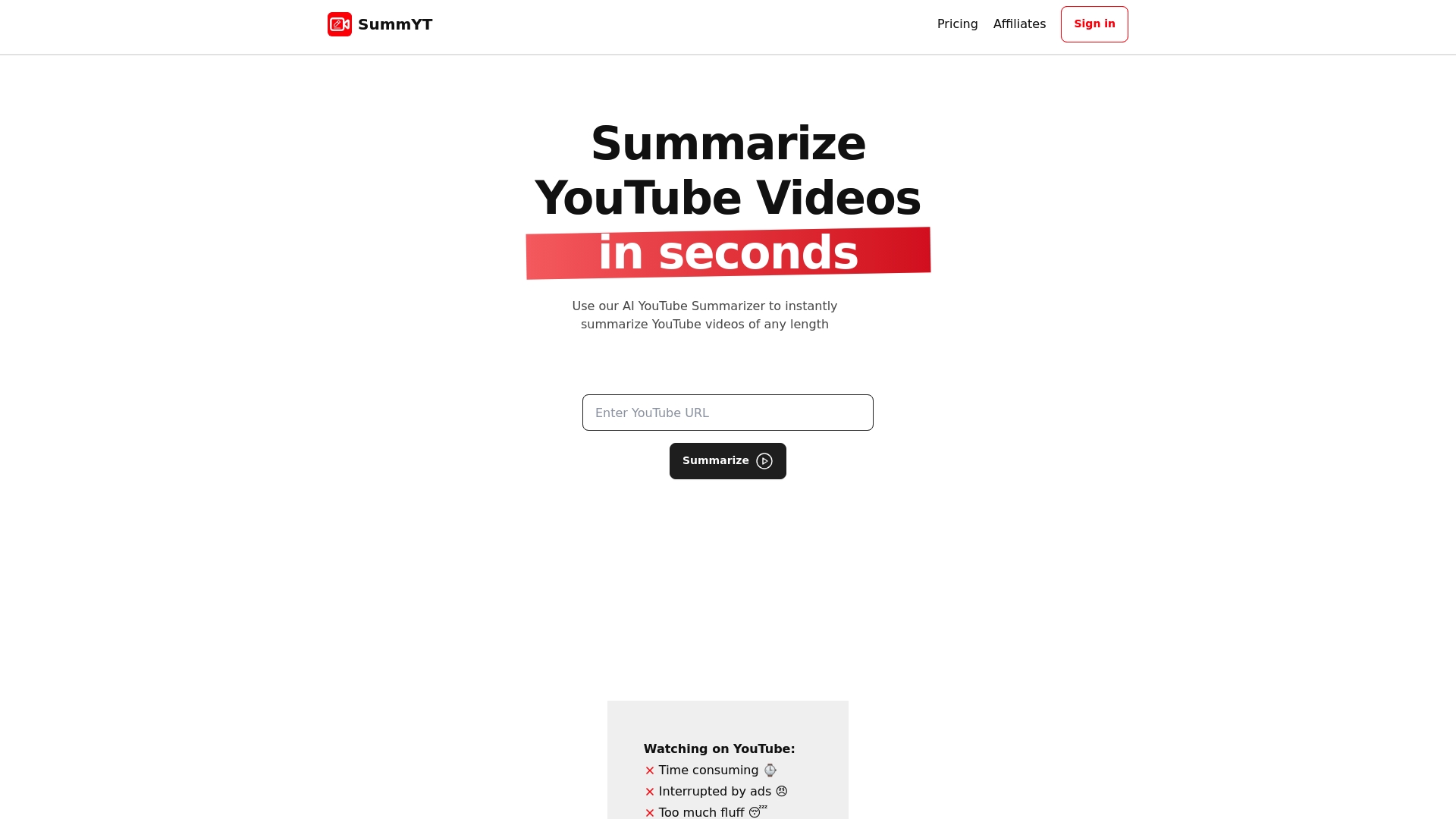
Don’t let time constraints limit your learning efficiency. With SummYT, you get unlimited summaries, easy access through browser extensions, and multilingual support for diverse content. Whether you are a student rushing to prep for exams, a professional needing to stay current with industry webinars, or a lifelong learner clearing your watch later list, our platform makes video-based knowledge accessible and productive. Experience the future of digital learning today at SummYT and turn every webinar into a powerful tool for growth.
Frequently Asked Questions
What are webinar summaries and their purpose?
Webinar summaries are concise documents that distill key insights and essential information from longer online presentations. Their purpose is to provide rapid comprehension and actionable insights to decision-makers without requiring them to watch the entire webinar recording.
How do webinar summaries enhance learning retention?
Webinar summaries enhance learning retention by breaking down complex information into digestible segments, reducing cognitive load, and aiding memory formation through structured presentation and visual cues.
What are the different types of webinar summaries available?
Different types of webinar summaries include executive summaries, technical briefs, highlight reels, infographic summaries, and slide decks, each tailored for specific audiences and objectives to maximize knowledge sharing.
What are some common challenges in creating webinar summaries?
Common challenges include maintaining content accuracy, capturing contextual nuances, and avoiding oversimplification or misinterpretation of complex arguments in automated summaries.