Productive Video Learning Steps for Faster Comprehension


Scrolling through hours of educational YouTube videos can leave even the most dedicated American student feeling overwhelmed. With so much content and limited time, finding efficient strategies to truly understand new topics is more important than ever. Studies show that setting clear learning goals boosts academic performance and makes video watching far more productive. This approach helps you target essential information, organize knowledge, and remember new concepts longer without getting lost in endless footage.
Table of Contents
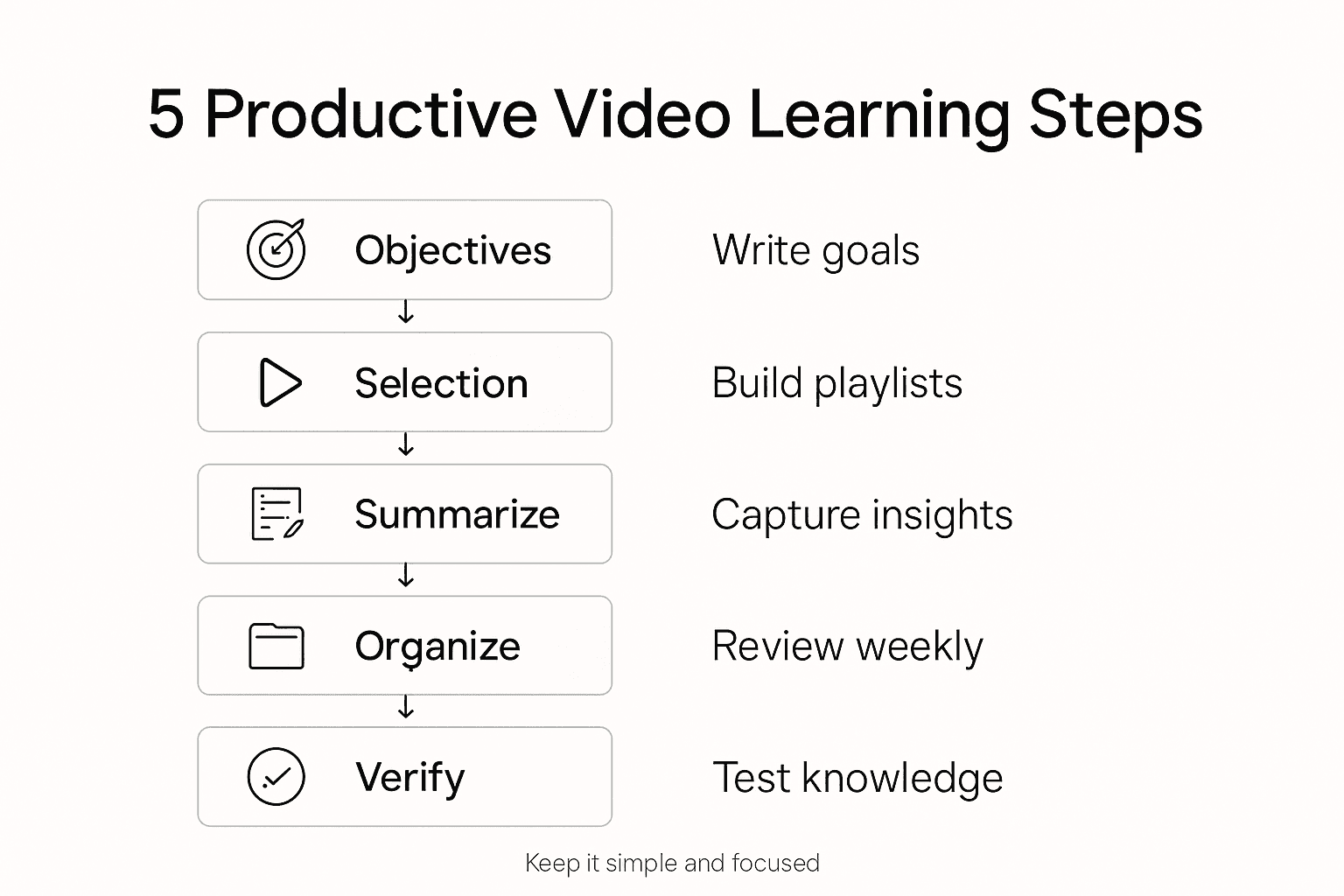
- Step 1: Set Learning Objectives Before Watching
- Step 2: Choose and Load Relevant YouTube Videos
- Step 3: Summarize Key Insights With Summyt
- Step 4: Organize Summaries for Easy Review
- Step 5: Verify Understanding Through Quick Checks
Quick Summary
| Key Point | Explanation |
|---|---|
| 1. Set clear learning objectives | Define specific goals before watching to enhance focus and retention during video learning. |
| 2. Choose quality videos wisely | Select educational content that aligns with your goals and comes from reputable sources for accuracy. |
| 3. Summarize key insights effectively | Use tools like SummYT to extract and organize main concepts, making them easier to review and understand. |
| 4. Organize summaries for easy access | Create a structured digital repository for your summaries, categorized for quick retrieval and study. |
| 5. Verify understanding actively | Use self-explanation and teaching methods to confirm comprehension and reinforce learning. |
Step 1: Set learning objectives before watching
Learning objectives transform passive video watching into an active, targeted learning experience. By defining clear goals before pressing play, you create a strategic roadmap that maximizes comprehension and retention.
Start by asking yourself specific questions about what you want to learn from the video. Are you seeking technical skills, conceptual understanding, or practical insights? Research demonstrates that prompting students to set goals before learning activities significantly boosts self-regulated learning and academic performance. This means breaking down your learning objectives into precise, measurable outcomes.
For academic or professional videos, draft 2-3 specific learning targets. Example objectives might include: “Understand the core principles of machine learning algorithms,” “Identify key project management techniques,” or “Learn three practical coding strategies.” By articulating these goals beforehand, you create a mental framework that helps your brain actively filter and organize incoming information. Clear learning objectives help build conceptual frameworks that connect new information with prior knowledge, ensuring the video serves a clear educational purpose.
Pro tip: Write down your learning objectives in a visible place before watching the video, and check them off as you gain understanding to maintain focus and track your learning progress.
Here is a comparison of active vs. passive video learning strategies:
| Approach | Engagement Level | Typical Outcome | Ideal For |
|---|---|---|---|
| Passive Watching | Low | Limited retention | Casual viewing, entertainment |
| Goal-Oriented Learning | High | Strong comprehension | Academic, skill development |
Step 2: Choose and load relevant YouTube videos
Selecting the right YouTube videos is crucial for effective learning. Your goal is to find high-quality educational content that aligns precisely with your learning objectives and provides accurate, engaging information.
Research indicates the importance of carefully evaluating YouTube videos based on technical quality, information accuracy, and conceptual effectiveness. Begin your search by leveraging specific keywords related to your learning objectives. Look for videos from reputable sources such as university channels, professional organizations, established educators, or recognized educational YouTube channels that specialize in your topic. Pay attention to the video’s view count, likes, and comments as initial indicators of quality and relevance.
When reviewing potential videos, check the creator’s credentials, the video’s publication date, and watch the first few minutes to assess the content’s clarity and depth. Aim to select videos that break down complex topics into digestible segments, use clear visuals or demonstrations, and maintain a professional yet engaging presentation style. Consider creating a shortlist of 3-5 videos on your chosen topic, allowing you to compare approaches and select the most comprehensive resource.
Pro tip: Bookmark or create a dedicated playlist for your selected learning videos to maintain an organized learning repository and easily track your educational progress.
Step 3: Summarize key insights with SummYT
Capturing and consolidating the most important information from your educational videos is a critical step in effective learning. SummYT transforms your video watching experience by automatically extracting the core concepts and key takeaways.
Using SummYT is straightforward and designed to streamline your learning process. Upload or paste the YouTube video link, and the platform will quickly generate a concise summary that highlights the most significant points. Explore different types of content summaries that can enhance your learning strategy to maximize your comprehension and retention. The AI powered tool breaks down complex information into digestible bullet points, making it easier to review and internalize the critical information.
After generating the summary, take time to review and annotate the key insights. Compare the AI generated summary with your initial learning objectives to ensure you’ve captured the most relevant information. This cross reference approach helps reinforce your understanding and identifies any areas that might require additional review or deeper exploration.
Pro tip: Create a personal knowledge base by saving and organizing your video summaries in a digital notebook or study folder for quick future reference and easy review.
Step 4: Organize summaries for easy review
Transforming your video summaries into a structured knowledge repository helps reinforce learning and makes future reference effortless. The key is creating a systematic approach that allows quick retrieval and meaningful connections between different pieces of information.

Advanced research platforms demonstrate how integrating summarization with organization can streamline knowledge management. Start by creating a digital folder or notebook categorized by subject, topic, or learning goal. Within each category, arrange your SummYT generated summaries chronologically or by complexity. Consider using tags or metadata to make searching and filtering more efficient. Explore strategies for developing an effective summary review system that matches your personal learning style and academic or professional needs.
Regularly review and update your summary collection. Cross reference summaries from different sources to identify patterns, fill knowledge gaps, and deepen your understanding. This active engagement with your summaries transforms passive note taking into an dynamic learning process that continuously builds and refines your knowledge base.
Pro tip: Set a weekly review schedule to revisit and reconnect with your summaries, transforming them from static notes into living, evolving resources that support your ongoing learning journey.
Step 5: Verify understanding through quick checks
Ensuring you have genuinely comprehended the video content requires active verification. Quick checks transform passive watching into an interactive learning experience that confirms your understanding and identifies potential knowledge gaps.
Advanced AI platforms now integrate automatic knowledge checks that enable personalized adaptive learning paths. After reviewing your SummYT generated summary, design brief self assessment techniques like writing short explanations of key concepts, creating mental mind maps, or verbally teaching the material to an imaginary audience. These strategies force you to process and reconstruct the information using your own words, which solidifies comprehension far more effectively than passive review.
Consider mixing different verification methods to engage multiple learning styles. Try generating practice questions based on the summary, sketching visual representations of complex ideas, or explaining the core concepts to a study partner. The goal is not just to memorize information but to demonstrate a nuanced understanding that goes beyond surface level recall.
Pro tip: Aim to explain each key concept from your video summary as if you were teaching a complete beginner absolute clarity and simplicity.
This table summarizes effective methods to verify understanding after watching educational videos:
| Verification Method | How It Works | Best Use Case |
|---|---|---|
| Self-Explanation | Summarize concepts in own words | Solo study, reflection |
| Mind Mapping | Visualize key relationships | Visual learners, review |
| Teaching Others | Explain topic to someone else | Group study, deeper learning |
Accelerate Your Learning with Smart Video Summaries
The challenge of active, goal-oriented video learning is real. Setting clear objectives and summarizing complex content can feel overwhelming and time-consuming. You want to save time and improve comprehension without sacrificing the depth of understanding the article emphasizes. With SummYT, you can instantly convert any YouTube educational video into clear, concise summaries that match your learning goals. This solves key pain points like organizing insights, verifying understanding, and managing vast amounts of information from lectures, webinars, or tutorials.
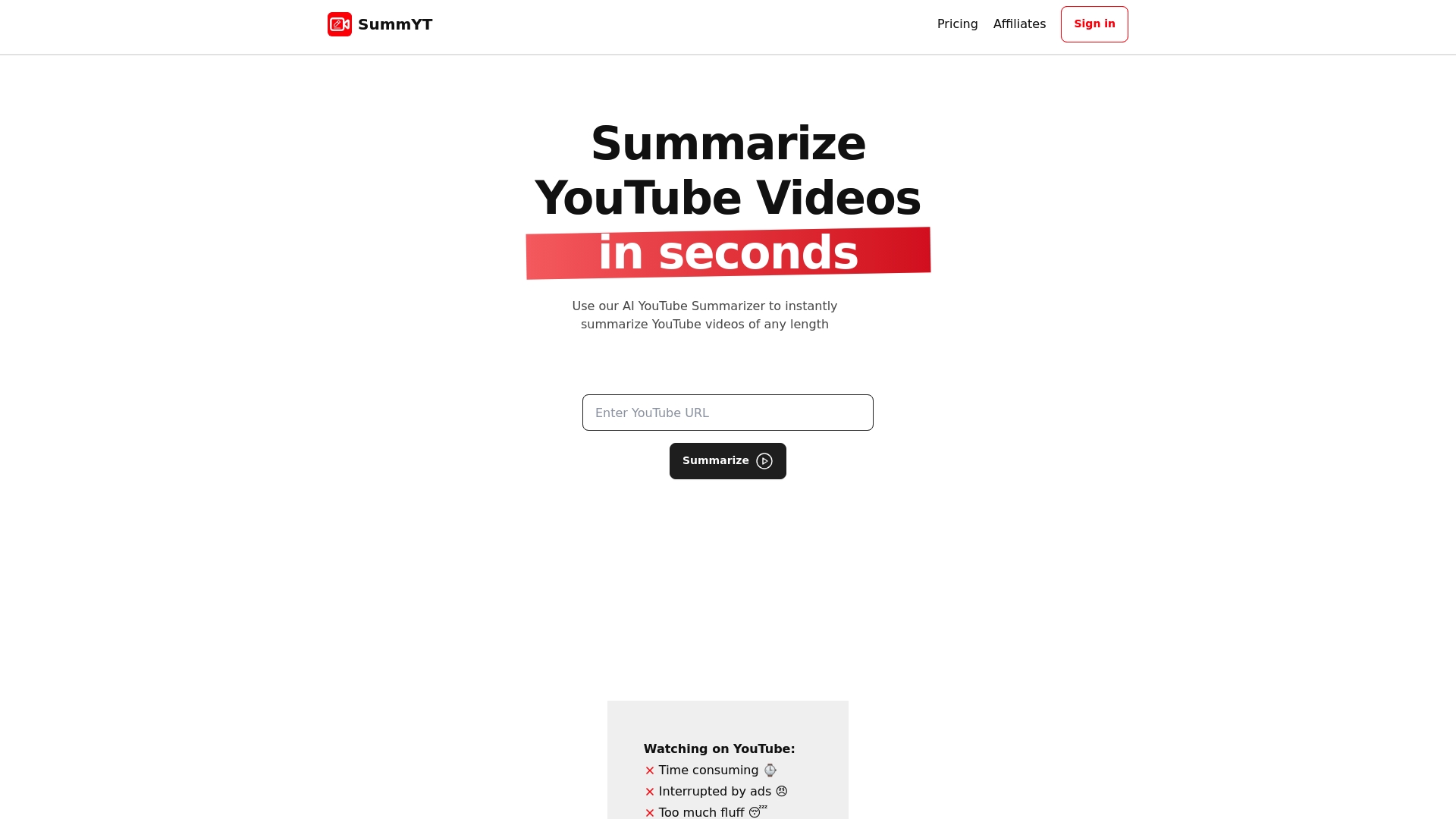
Stop wasting hours watching full videos without focus. SummYT’s AI-powered platform empowers you to capture essential concepts quickly and revisit them anytime for efficient review. Whether you are a student, professional, or lifelong learner ready to transform your video learning routine, start leveraging this productivity tool today. Visit SummYT to experience faster comprehension and smarter video study. Take control of your learning journey now and never miss out on key takeaways again.
Frequently Asked Questions
What are effective learning objectives when watching educational videos?
Defining effective learning objectives involves identifying specific outcomes you want to achieve. Write down 2-3 measurable targets, such as “Understand key machine learning principles,” to help focus your attention while watching.
How can I find high-quality YouTube videos for learning?
To find high-quality educational YouTube videos, use specific keywords related to your topics of interest and seek out reputable sources like university channels or established educators. Look for videos with high view counts and positive feedback to ensure the content is engaging and reliable.
What should I do after summarizing the insights from a video?
After summarizing insights from a video, review and annotate the key takeaways to align with your learning objectives. This will help reinforce what you’ve learned and highlight any areas where you may need further study or clarification.
How can I verify my understanding after watching a video?
To verify your understanding, create brief self-assessments such as explaining key concepts in your own words or teaching the material to someone else. This method deepens comprehension and ensures you can recall the information accurately.
Is it important to review and organize my video summaries?
Yes, regularly reviewing and organizing your video summaries enhances retention and creates a structured knowledge base for future reference. Set aside time each week to revisit your summaries and connect different ideas for a more holistic understanding.
What role does SummYT play in my video learning process?
SummYT helps streamline your learning by automatically generating concise summaries of educational videos, highlighting key points for easy review. To maximize your learning, upload your video link to SummYT after watching.