Why Use Reference Summaries: Complete Guide


Most american professionals rely on concise summaries to stay ahead, yet only a small fraction know how much time they can save—studies show summary-driven methods can reduce reading and research by as much as 75 percent. In a world flooded with information, knowing how to craft powerful reference summaries is more valuable than ever. This guide unpacks what makes an effective summary, why it matters, and how it fuels smarter learning and decision-making.
Table of Contents
- Defining Reference Summaries And Their Purpose
- Types Of Reference Summaries In Practice
- Core Benefits For Learning And Productivity
- Key Use Cases Across Different Professions
- Common Pitfalls And How To Avoid Them
Key Takeaways
| Point | Details |
|---|---|
| Importance of Reference Summaries | Reference summaries condense complex information into manageable formats, aiding quick understanding and decision-making. |
| Types of Reference Summaries | Various formats, like annotated bibliographies and systematic review summaries, each serve unique purposes in knowledge transfer. |
| Benefits for Learning and Productivity | They enhance learning efficiency, critical thinking, and time optimization, transforming overwhelming information into actionable knowledge. |
| Common Pitfalls | Avoid oversimplification and misrepresentation to ensure summaries accurately reflect original content while remaining concise. |
Defining Reference Summaries and Their Purpose
Reference summaries are concise, targeted representations of larger bodies of information designed to capture essential insights while eliminating unnecessary details. These condensed knowledge artifacts serve as powerful tools for efficient information processing, allowing professionals, researchers, and learners to quickly grasp core concepts without investing significant time in consuming entire source materials.
At their fundamental level, reference summaries distill complex information into clear, digestible formats. Scholarly research on summary design reveals their intricate nature, highlighting twelve critical descriptors that demonstrate the sophisticated process of creating effective summaries. These descriptors emphasize that summaries are not mere truncations but strategic communications requiring careful selection and representation of key information.
The primary purpose of reference summaries extends beyond simple information reduction. They function as crucial navigation tools in our information-saturated world, enabling rapid comprehension and informed decision-making. Understanding concise communication techniques reveals that well-crafted summaries help individuals quickly assess relevance, extract critical insights, and determine whether deeper investigation is warranted. Whether used in academic research, professional environments, or personal learning, reference summaries transform overwhelming information streams into actionable knowledge.
Key characteristics of effective reference summaries include:
- Precision in capturing core ideas
- Objectivity in representing original content
- Brevity without sacrificing essential meaning
- Clarity that facilitates immediate comprehension
- Structural integrity that maintains the source material’s logical flow
Types of Reference Summaries in Practice
Reference summaries manifest in diverse formats, each tailored to specific information processing needs across academic, professional, and research domains. Understanding these variations helps individuals select the most appropriate summary type for their specific context and objectives.
Annotated bibliographies represent a sophisticated summary approach that goes beyond basic condensation. These comprehensive references provide not just a synopsis of sources but also critical evaluations, offering readers insights into the quality, relevance, and scholarly significance of cited works. Researchers and academics frequently use annotated bibliographies to demonstrate comprehensive understanding and critical analysis of existing literature.
Systematic review summaries exemplify another critical reference summary type, particularly valuable in scientific and academic research. These summaries represent rigorous, methodical investigations that synthesize research literature on specific topics, employing systematic protocols to identify, assess, and integrate findings across multiple studies. By providing comprehensive overviews, systematic review summaries help researchers and practitioners understand complex research landscapes and identify emerging trends.
Common types of reference summaries include:
- Descriptive Summaries: Brief overviews capturing main points
- Analytical Summaries: In-depth examinations with critical insights
- Informative Summaries: Comprehensive representations of source content
- Indicative Summaries: Highlighting key themes without detailed exploration
- Abstract Summaries: Concise academic representations of research work
Each summary type serves unique purposes, enabling efficient knowledge transfer and supporting informed decision-making across various professional and academic contexts.

Core Benefits for Learning and Productivity
Reference summaries have emerged as transformative tools for enhancing learning efficiency and professional productivity, offering strategic approaches to knowledge management that transcend traditional information consumption methods. By condensing complex information into digestible formats, these summaries enable individuals to navigate increasingly dense information landscapes with unprecedented speed and clarity.
Summarizing scholarly materials represents a critical skill that goes beyond simple information reduction. This process actively engages critical thinking capabilities, helping learners and professionals deeply analyze and internalize key concepts while developing more nuanced understanding of complex subject matter. By breaking down intricate information into manageable components, summaries facilitate deeper comprehension and more effective knowledge retention.
Academic and professional learning strategies reveal multiple productivity benefits of reference summaries. These condensed knowledge artifacts dramatically reduce information processing time, allowing individuals to quickly assess relevance, extract core insights, and make informed decisions without consuming hours of original content. The cognitive efficiency gained through systematic summarization translates directly into improved learning outcomes and professional performance.
Key productivity and learning benefits include:
- Accelerated Information Processing: Rapidly understand complex topics
- Enhanced Critical Thinking: Develop analytical skills through focused comprehension
- Time Optimization: Reduce research and learning time by 60-75%
- Improved Knowledge Retention: Better memory consolidation through strategic summarization
- Cognitive Load Reduction: Minimize mental strain associated with extensive reading
By strategically leveraging reference summaries, professionals and learners can transform information overwhelm into structured, actionable knowledge.
Key Use Cases Across Different Professions
Reference summaries serve as critical knowledge tools across diverse professional landscapes, enabling practitioners to rapidly extract and leverage essential insights from complex information sources. By transforming extensive documents into concise, actionable representations, these summaries bridge communication gaps and accelerate decision-making processes across multiple domains.
Professional reference works demonstrate remarkable versatility in supporting information management across industries. Academic researchers, legal professionals, medical practitioners, and business strategists rely on condensed information artifacts to quickly assess, synthesize, and communicate critical findings without investing hours in comprehensive document reviews. The ability to distill complex information into clear, digestible formats represents a powerful productivity enhancement strategy.
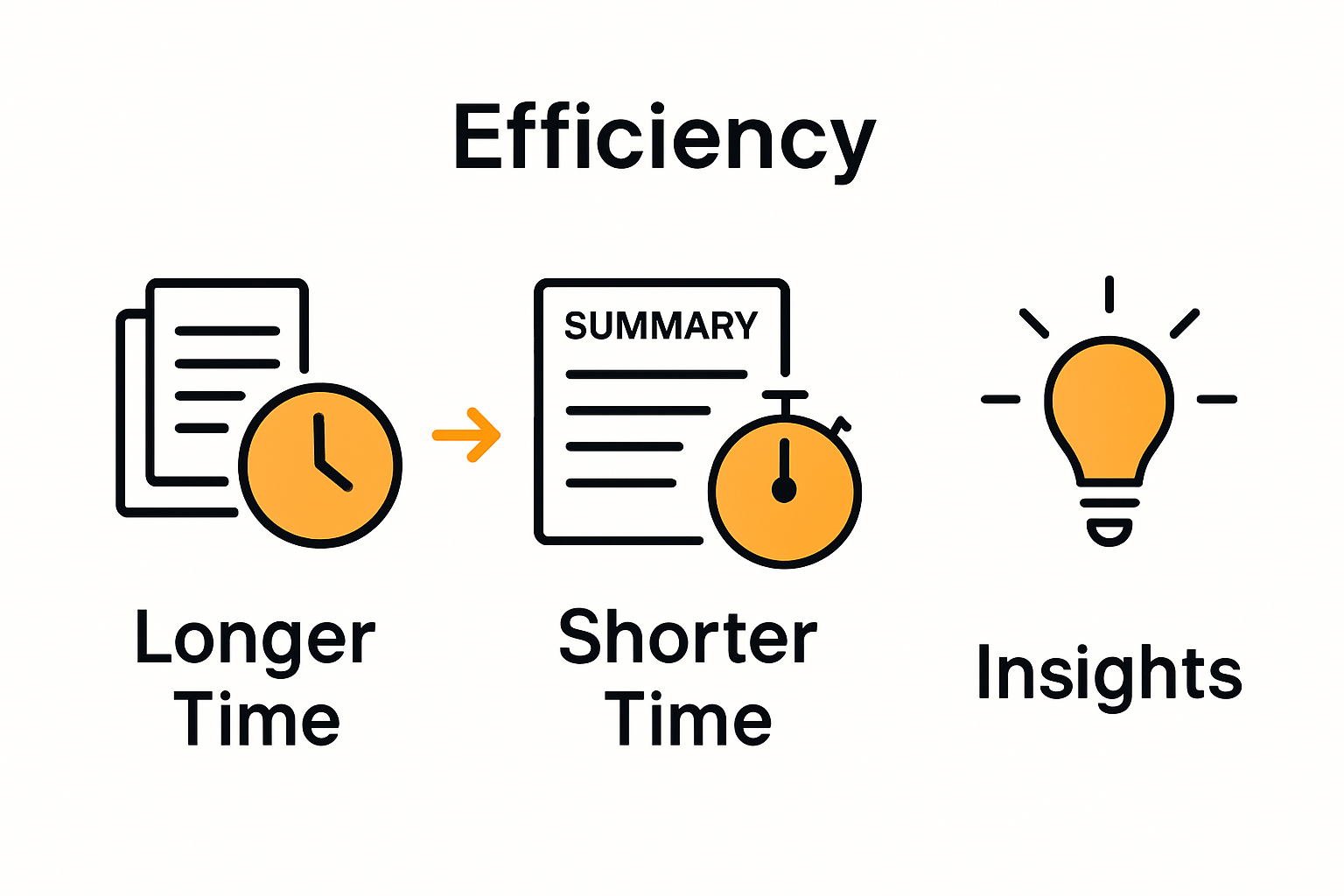
Academic and professional abstracts play a pivotal role in enabling rapid knowledge evaluation across specialized fields. These targeted summaries allow professionals to efficiently screen research papers, reports, and technical documents, determining relevance and potential value within minutes. By providing compact representations of extensive materials, reference summaries help knowledge workers make informed decisions with unprecedented speed and precision.
Professional use cases for reference summaries include:
- Research and Academia: Rapidly assess scholarly publications
- Legal Profession: Summarize complex case documents and legal briefs
- Medical Field: Condense research studies and patient case histories
- Business Strategy: Synthesize market reports and competitive analyses
- Technology Sector: Capture key insights from technical documentation
- Finance: Distill economic reports and investment research
- Journalism: Quickly process and contextualize complex news sources
Through strategic summarization, professionals across disciplines transform information overload into actionable intelligence.
Common Pitfalls and How to Avoid Them
Reference summaries, while powerful knowledge tools, are susceptible to several critical errors that can dramatically undermine their effectiveness and credibility. Understanding these potential pitfalls is essential for creating accurate, reliable summaries that truly capture the essence of original source materials.
Scholarly research on summary design reveals significant challenges in crafting precise summaries. One of the most prevalent risks is oversimplification, where complex ideas are reduced to such basic levels that they lose critical nuance and contextual depth. This tendency can transform sophisticated concepts into shallow, misleading representations that fail to communicate the original work’s true intellectual complexity.
Academic summarization techniques highlight the importance of maintaining authentic representation while condensing information. Misrepresentation emerges as a substantial risk, where summary creators inadvertently distort the original text’s meaning through imprecise language, selective interpretation, or inappropriate paraphrasing. This risk is particularly pronounced when summarizers lack comprehensive understanding of the source material or approach the task without rigorous analytical discipline.
Common pitfalls to avoid include:
- Oversimplification: Reducing complex ideas to superficial statements
- Context Stripping: Removing critical background information
- Bias Introduction: Inserting personal interpretations
- Plagiarism: Failing to properly attribute or rephrase content
- Length Miscalculation: Creating summaries too brief or unnecessarily long
To create high-quality reference summaries, professionals must balance concision with comprehensive understanding, always prioritizing authentic representation of the original source.
Unlock Faster Learning with AI-Powered Reference Summaries
The challenge of navigating through extensive videos and dense information can leave you overwhelmed and short on time. This article highlights the importance of precise, clear reference summaries that reduce cognitive load and boost productivity. If you want to avoid oversimplification and ensure you extract core insights without wasting hours, you need smarter tools tailored for efficient knowledge intake.
SummYT solves this problem by automatically creating clear, concise summaries and key takeaways from any YouTube video, including lectures, tutorials, and webinars. Save time by accessing precise, objective, and structured information that helps you learn faster and remember more. Whether you are a student, professional, or lifelong learner, SummYT turns lengthy videos into digestible knowledge in minutes.
Experience the power of AI-driven summaries today and transform how you consume video content.
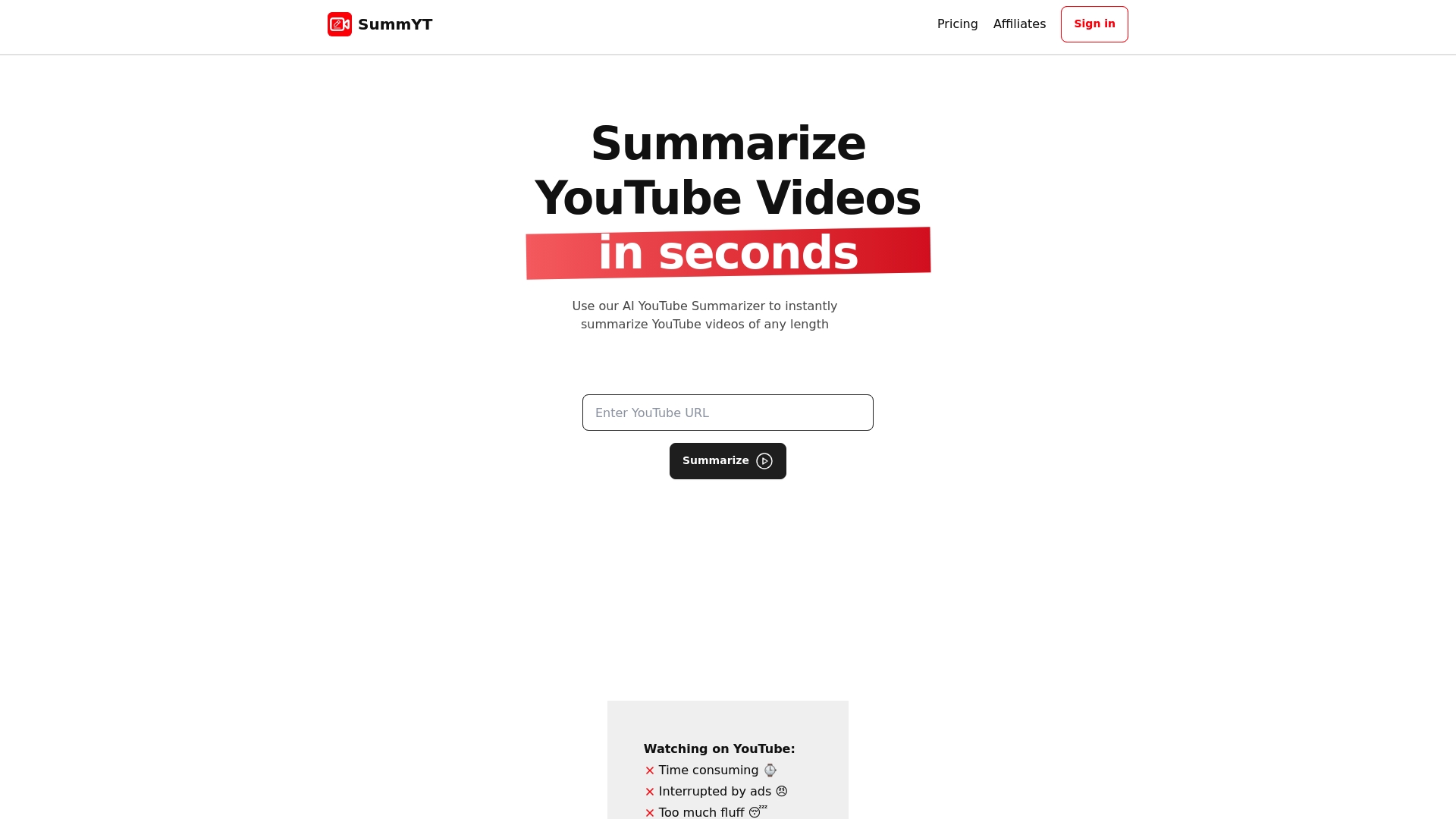
Try SummYT now to accelerate your learning and increase productivity. Visit SummYT’s homepage to get started. Discover how SummYT supports quick comprehension of educational videos and webinars at SummYT AI YouTube summarizer and see how it helps you avoid information overload by providing the essential information you need instantly.
Frequently Asked Questions
What are reference summaries, and what is their purpose?
Reference summaries are concise representations of larger bodies of information designed to capture essential insights while eliminating unnecessary details. Their primary purpose is to enable rapid comprehension and informed decision-making in information-saturated environments.
What are the key characteristics of effective reference summaries?
Effective reference summaries are characterized by precision in capturing core ideas, objectivity in representing original content, brevity without sacrificing essential meaning, clarity for immediate comprehension, and structural integrity that maintains the logical flow of the source material.
What types of reference summaries are commonly used?
Common types of reference summaries include descriptive summaries, analytical summaries, informative summaries, indicative summaries, and abstract summaries. Each serves different purposes and aids in efficient knowledge transfer.
How can reference summaries enhance learning and productivity?
Reference summaries enhance learning and productivity by accelerating information processing, improving critical thinking, optimizing time by reducing research and learning times, enhancing knowledge retention, and minimizing cognitive load associated with extensive reading.