
Topic
Philosophy
Browse ideas, ethics, thinkers, and worldview-focused summaries.

Explores the quantum measurement problem, von Neumann's chain, and proposals like Penrose–Hameroff Orch‑OR that link wave‑function collapse to consciousness.
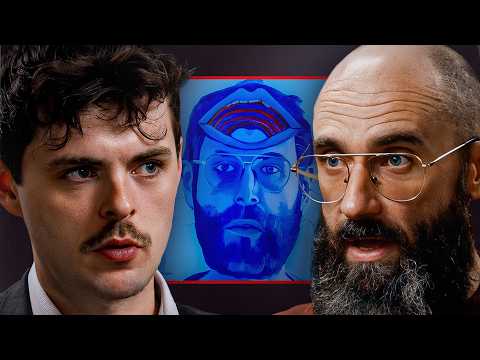
A candid conversation about whether free will exists and how consciousness may have arisen via cultural change, the bicameral mind, and shifting dream narratives.

A wide-ranging philosophical dialogue about whether objects, people, and consciousness truly 'exist'—covering Ship of Theseus, identity, free will, and pansychism.

A concise exploration of whether God is timeless or temporal and how competing theories of time (block universe, presentism) affect divine knowledge, action, and human freedom.

Dr. Stuart Hameroff reviews new experiments showing post‑mortem high‑gamma brain surges and explains how Orch‑OR microtubule quantum processes could account for conscious experience after death.

Jason Jorjani connects UFOs, parapsychology, ancient myths and political intrigue to argue that elite secrecy, time-manipulating tech, and Promethean ideas reshape religion and history.

Donald Hoffman presents a technical and philosophical case that space-time is a user-facing 'VR headset' produced by a deeper consciousness. He outlines a mathematical program—conscious agents, Markov chains and trace--

A concise exploration of consciousness beyond humans — octopus neurology, crow and elephant cognition, and the Cambridge Declaration's implications.

A look at how The Autobiography of a Yogi and Patanjali’s Yoga Sutras describe consciousness as a mechanism that shapes physical reality.

Billy Carson explains the CIA’s declassified Gateway Process and Hemi‑Sync, connects binaural entrainment to Thoth and the Emerald Tablets, and explores higher dimensions, Merkaba, epigenetics and practical mind‑training

Jesse Michels and Riz Virk probe the simulation hypothesis—physics, information theory, Mandela Effect, UFOs and mystical practices as clues to reality.

alex o'connor argues philosophy of mind is the next big thing, exploring panpsychism, the combination problem, split‑brain evidence, and interdisciplinary routes forward.

Ret. Sgt. Clifford Stone recalls telepathic alien contact, military crash recoveries, and what ETs allegedly revealed about death, God, and humanity's future.

Greg Carlwood frames sigil magic as a practical method to program the subconscious: how to make sigils, use Gordon White’s 'robo-fish' group launch, and pair intention with astrology and precise goals to change outcomes.

A focused biography of Walter Russell — his childhood illuminations, 39-day revelation that produced The Divine Iliad, and his cosmology that centers light and inner genius.

Andrew Tate reframes visualization: practice gratitude, visualize the skills and identity you must become, and treat outcomes as earned, not begged for.

David Bayer distills five core distinctions from Florence Scovel Shinn—life as a rule-bound game, words as creative tools, non-resistance, imagination before manifestation, and faith as acceptance—to show how inner laws造

Overview of Auguste Comte’s attempt to replace traditional religion with a secular 'Religion of Humanity'—complete with calendar, temples, rituals, and a contested legacy.
chris williamson distills 19 lessons from 1,100 episodes on obsession, self-awareness, monk mode, relationships, and the idea of a ‘true self’.

Mark Manson on tolerating uncertainty, choosing partners for everyday life, embracing friction, and turning learning into action.

Michael Smoak shares 16 blunt life lessons about ambition: the cost of striving, the role of vulnerability, loneliness on the growth path, and why communication and consistency win.

A personal account of how losing his physique changed how women treated him and the lessons about attraction, respect, and maintaining polarity in relationships.

A practical, archetypal guide to deep shadow work — recognize, own, and safely express repressed parts so they lose power and fuel creativity and self-acceptance.
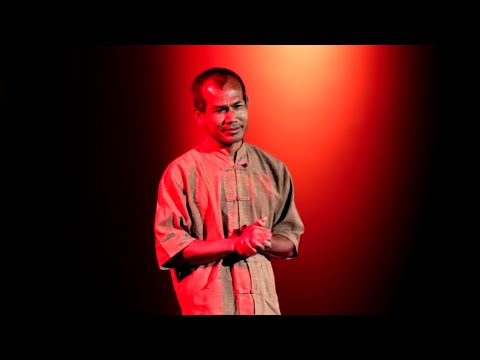
Jon Jandai recounts leaving Bangkok to return to rural Thailand and shows how simple farming, low‑tech building, and community seed saving make life easier and more fulfilling.