
Topic
Money
Browse investing, trading, wealth, and financial decision-making summaries.

A practical how-to for new traders on keeping daily logs: pick one phenomenon at a time, focus on pre-market highs/lows, screenshot key setups, track opening gaps and fair value gaps, and build a six-week routine to ing雨

Wall Street and major payment firms are running validator nodes on a permissioned stablecoin blockchain as new U.S. law (the Genius Act) forces regulated dollar stablecoins—and a race to shift the dollar onto crypto rail

Trader explains their NQ bias for NFP Friday: expecting a drop to the regular trading hours opening-range gap low, managing stops, and avoiding replay-based teaching.

Live trade walkthrough of a short-biased intraday strategy during NFP week using opening-gap lows, inversion fair value gaps, market-maker dynamics, and tight stops.

A four-step 0DTE SPY options system for small accounts: use liquid tickers (SPY/QQQ), trade zero-day leverage, set hard stops/OCO orders, and enter on 50% fib with candle confirmation.

A step-by-step 6-month system to define your rich life, fix spending, crush high-interest debt, automate investing, and grow your income.

This video reframes money as condensed energy and shows how your electromagnetic field, nervous system state, Tesla-inspired techniques, Jungian shadow work, and quantum observation all determine whether you attract or阻止
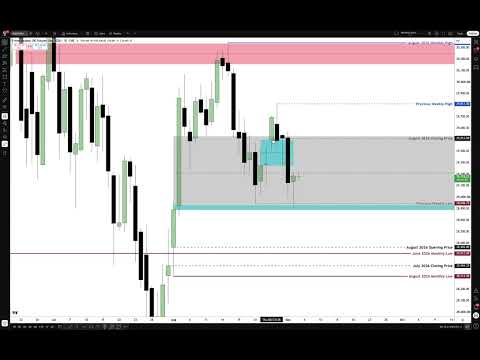
Practical checklist for new traders: declutter charts, track three-month monthly ranges, mark weekly/new-week gaps, journal key levels, and use multi-timeframe analysis.

Jay Shetty interviews Jaspreet Singh on money mindset, the 75/15/10 allocation, emergency savings, investing basics, and how AI can accelerate financial opportunity.

A deep-dive into Mikki Mase (Dirty Goth Boy): viral casino wins, grand business claims, and the investigation exposing gaps, contradictions, and legal questions.

Former CIA officer Andrew Bustamante explains how wealthy people use asset-backed loans (SBLOC, MELOC, margin) to borrow tax-efficiently and grow wealth — and how you can apply the same principles.

A 20-year Pattaya resident dismantles Western myths about the city's bar scene, explaining two financial strategies among women workers, the mang da dynamic, private intelligence networks, and how economic migration—not,

A concise breakdown of the warning signs—elite selling, massive capex, circular financing, and index concentration—that often appear before major market crashes.

Andrei Jikh explains how a US‑Iran deal, Kevin Warsh’s first Fed meeting and a plan to cut rates, shrink the Fed's balance sheet and loosen bank rules could ignite a long-term 'supercycle' favoring gold, bitcoin and real

Explains how rising long-term rates, bond vigilantes, and ballooning U.S. debt could force the Fed and Treasury into money printing, financial repression, and a major market reset.

A practical walkthrough for new traders on reading price action: trading opening gaps, using fair value gaps, placing stops, and managing trades while learning.

Felix explains why he won't buy certain 'gold' products anymore—chiefly gold ETFs that gradually sell metal to cover fees—and compares four ways to own gold: ETFs, physical metal, miners, and royalty/streaming companies.

A retired fraud investigator explains why robocalls keep 1–3 seconds of silence: predictive dialers are testing for live people, creating 'sucker lists,' and how to answer safely.

Brian Scott summarizes Earl Prevette’s 1949 system for turning latent ability into cash using five laws of thinking, vocabulary, and a nine-step activation.

Dan Tapiero lays out a $50T macro thesis for crypto, argues for equity-focused, revenue-driven investing over token speculation, and stresses patience, legal clarity, and AI-driven growth.

Lance Roberts reviews growing technical and fundamental signs that a stock-market pullback is likely, covers Nvidia earnings, Fed signals, a potential Venezuela oil lease, and practical risk-management steps.

A concise breakdown of the latest 13F filings from Buffett, Ackman, Burry, Pabrai, and Masayoshi Son — major buys, sells, AI bets, energy plays, and investor lessons.

Practical life and money lessons from a 69-year-old: prioritize time, separate your identity from work, simplify possessions, and start living before retirement.

A narrated lesson on stealth wealth: by choosing to look ‘less successful’—an old car, a cracked phone, skipping showy dinners—you avoid social pressure, reduce solicitations, and quietly let savings and investments comp